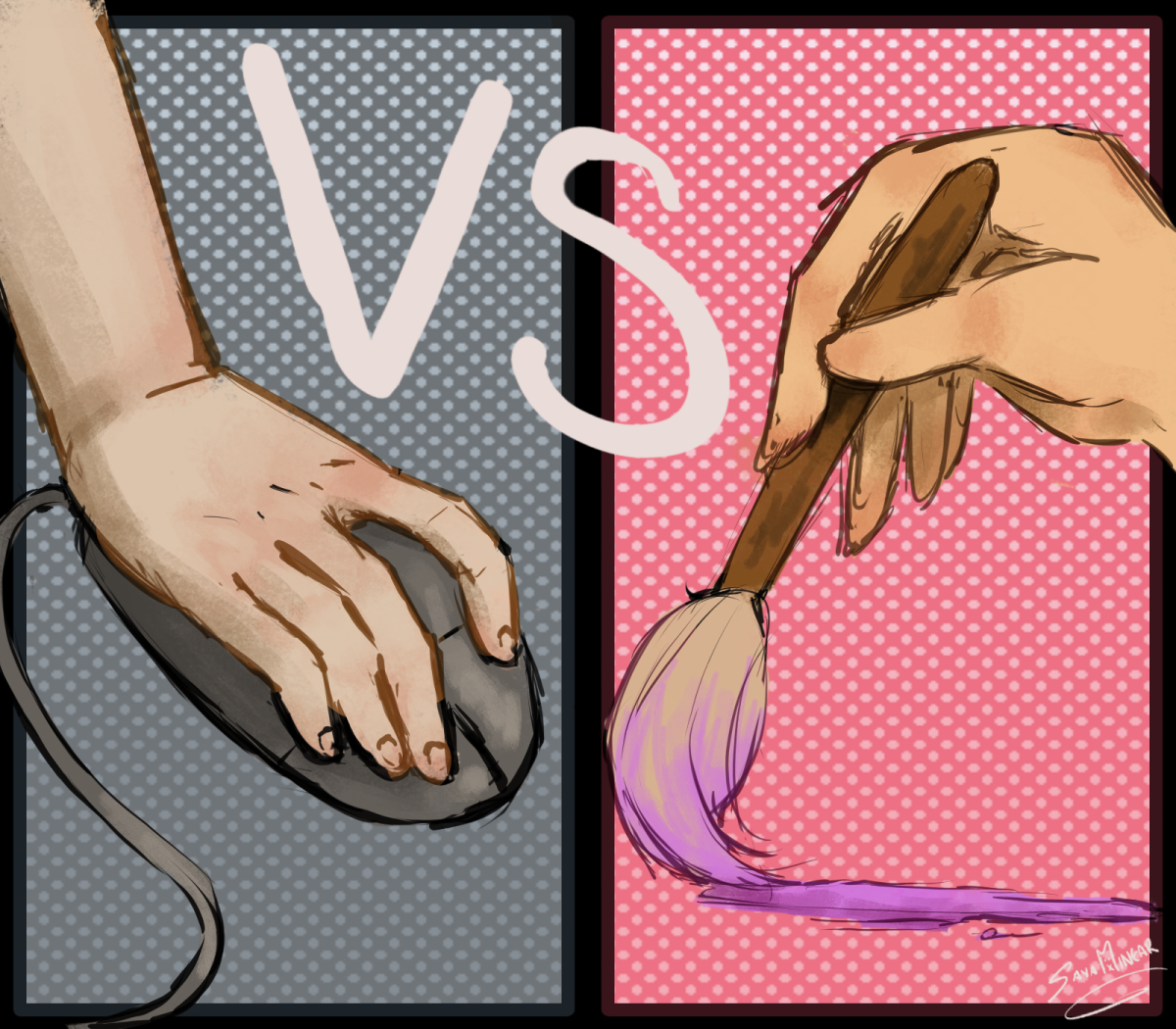
Generative AI has started to take the world over and this is negatively affecting our sense of creativity. Now we rely on AI to do everything for us, from answering questions to making art for people.
The start of Artificial Intelligence (AI) came from the 1900s, when popular media had robot characters like Tik-Tok from the book “Ozma of Oz” or plays based off of artificial “humans” like “Rossum’s Universal Robots”. These stories inspired scientists to start testing if they could make artificial brains. Although AI’s history truly started in the 1950s with machine-learning algorithms, it has since grown to almost everyone in the world now inches away from an AI resource. OpenAI started ChatGPT, which started many generative subcultures, such as large language models (LLM), most known as chatbots, text-to-image models and text-to-video models.
These models are now readily available to anyone, and people have been consistently seeing videos and images made with AI on social media platforms. Many of them can be misleading and truly damaging to creatives. Recently TikTok pages centered around AI content have been getting popular just from generating content. One called AI.Cinema021 peaked at 3.3 million followers in a little more than a week, just for posting AI “Fruit Love Island” videos. All over TikTok, people were posting videos wanting more of this generated content, with some refreshing the page constantly just to see if there were more. These videos were indirectly stolen from the television show “Love Island” by the whole premise of using fruit to replicate the reality show to straight up using the show’s music. TikTok took them down for violating their Community Guidelines, although many of their videos are still up today. Many artists started to recreate these fruit people. Some of them have less than 3,000 likes while the AI-generated videos of “Fruit Love Island” have millions of likes. People are valuing AI over human-made art just because it’s “entertaining,” even though there is already a real show made by real people that they can watch.
LLMs are changing the way we think for the worse. According to the Nature Partner Journal (NPJ), “We pursue by asking LLMs to freely generate descriptions about people with political relevance, which we refer to as political persons, and only afterwards asking them to judge how positively or negatively the person is portrayed in the description. These assessments indirectly indicate LLMs’ favorability toward the ideological aims this person is known for, without needing to prepare normative questions with fixed dimensions.” These bots are trained to follow you, believe you, agree with you. This is called being a sycophant, “a servile self-seeking flatterer: one who praises those in power in order to gain their approval” according to the Merriam-Webster dictionary. This is very harmful to a person’s brain. Never getting a ‘no’ can make you believe that every idea or statement is good, and it could also make you never think outside of the box to try something new. It doesn’t try to make you consider how differing cultures think or political parties think and feel about certain things.
AI isn’t just taking the creativity out of things we can see, it’s also taking it out of things we listen to. A lot of people who have listened to AI-generated music say that it’s all dull, flat and lifeless compared to music made by humans. However, people still make it, for example “Walk My Walk” by Breaking Rust, an AI-made country song that hit No. 1 on the Billboard Country Digital Songs Sales chart Nov. 8 of last year. Even if this is not the most influential chart, the song still reached number one, showing that AI can outsell an artist. This makes artists so scared of their likeness being stolen by a bot that some are copyrighting their own voices. Taylor Swift has started her way to trademarking her own voice. According to Variety on April 24, she trademarked three things: two of them were sound clips of her voice saying “Hey, it’s Taylor Swift” and “Hey, it’s Taylor,” and the last one being a photograph of Swift holding a pink guitar, in a sequin dress while wearing silver boots from the Eras Tour. Artists shouldn’t need to trademark their voices just so people don’t copy music.
Not only has AI flooded into people’s social media, it has affected schools and their students’ work. Students use AI on answers that should be opinion based, because they want everything done as quickly as possible rather than thinking creatively about their answers. Work is handed in with facts, and no creativity to think another way and start something new. The AI makes it sound professional with no mistakes, which makes it obvious to teachers when students are using AI.
“I can usually tell right away because the writing does not sound authentic or coming from a typical ninth grade student,” freshman English teacher Sandy Butcher said. “Words may be overly technical, complicated, or highly academic therefore sounding an alarm bell to me to run the work through an AI checker.”
We need to stop using AI for answers, art, writing and ideas. We should think creatively without the fear of being wrong, because being incorrect gives us new ways to invent. Don’t pick up ChatGPT to get the next answer you don’t know or to have your next idea. Find a way to figure it out by yourself.